Endemic

At least 700 species of plants, animals and fungi are found in the UK and nowhere else in the world....


At least 700 species of plants, animals and fungi are found in the UK and nowhere else in the world. Most are virtually unknown, many are critically endangered, and there is no special attention paid to them as a group. But if any one of them is lost from the UK, it is gone from the world.
Part 1 of a 3-part series.
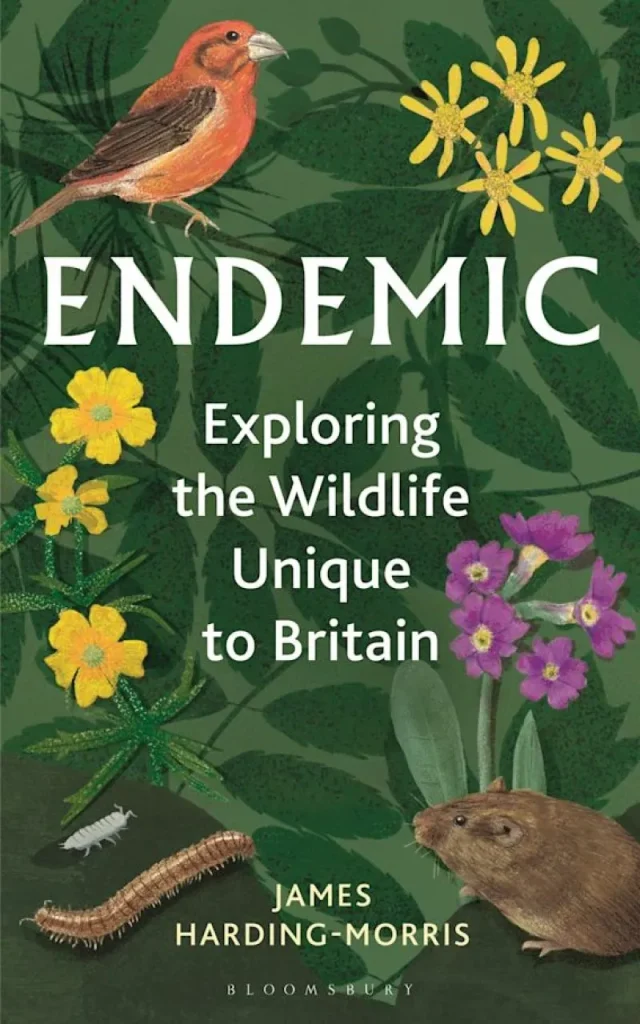
I don’t do book reviews on this website, but I’ll occasionally write one for other publications. I was recently sent a copy of James Harding-Morris’s debut book Endemic to review for British Wildlife magazine. The online review is here. I won’t repeat my (positive) views on James’s book here, but I wanted to say more about the issue that his book addresses.
This is the first of a mini-series on species endemism and its implications for UK and world conservation.
Endemic species are those that are found nowhere else; usually this implies a species found in only one country, because that shows clearly where responsibility lies for keeping it safe on behalf of the world. In practice most single-country endemics are much more restricted than that. Harding-Morris’s book takes Lundy Island in Devon as an example: the Lundy cabbage is a single-island endemic, and therefore a single-county endemic, as well as being endemic to England and therefore to the United Kingdom. As it happens, there is also a species of flea beetle that is so specific in its ecological needs that it is found only in association with the Lundy cabbage, so the Lundy cabbage flea beetle is endemic at all the same levels as well as being endemic to the Lundy cabbage itself.
Islands are often described as centres of endemism. Unique forms evolve there within the unique animal and plant communities that result from random arrivals on sea currents and trade winds. Most of them can’t survive in conditions that are usually very unlike those from which they came. For the survivors, isolation reduces the likelihood of the gene pool being topped up by the incomers’ parent species. As the islanders adapt fill new ecological niches, they differ ever more profoundly from the species they originally evolved from. Eventually, even if they did again meet up, they would be unable to interbreed and the uniqueness of the island form remains undiluted – they have become different species.
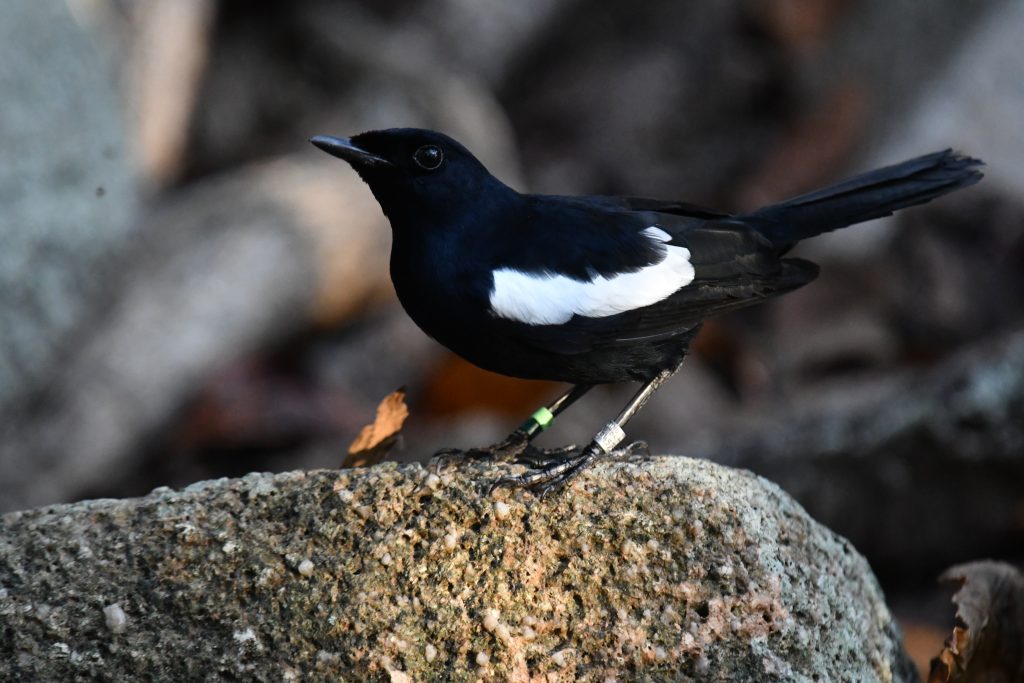
Last year my work took me to Seychelles. As I have mentioned elsewhere, I have been writing about the long – often many decades long – unstinting effort of the RSPB, working with a range of partners, to restore some of our most threatened species. I have mostly been concentrating on UK-based work but the RSPB’s role in saving the Seychelles magpie robin is a remarkable achievement that is already passing into conservation folklore. I’ll summarise that story in a future blog, but I mention it here because Seychelles is a particularly strange example of an oceanic island group that has become a centre of endemism.
Almost all the remote oceanic territories of the world are fairly recent, either the result of volcanic activity or built by coral, or both. In any case, the oceans appeared long before the islands. As a result, all the native terrestrial plants, animals and fungi that are found there arrived from over the sea. Seeds and spores blew in, land birds made their own way, maybe helped by storm winds, reptiles drifted on weed or fallen tree trunks. Even snails, freshwater invertebrates and soil fauna had a way of getting there, probably as eggs carried on the feet of birds. One group that is hardly ever found more than a few tens of miles from the continents is the amphibians, which cannot survive long at sea.

The Seychelles archipelago, however, includes granite islands that are ancient remnants of the break-up of the supercontinent Gondwana. They were finally isolated on a microcontinent of their own around 65 million years ago, with a ready-made flora and fauna which subsequently underwent further evolutionary change. Hence, Seychelles is unusual in having its own amphibian fauna of thirteen endemic species, including an entire endemic family of frogs, the four species of the rare and miniscule Sooglossidae, and a relatively common tree frog (pictured).
In this mini-series I shall be pondering questions about where species endemism figures in the conservation heirarchy – part two coming soon.